
Every hotel plans around its property management system from day one. The revenue management system, the technology that decides what each room actually sells for, deserves exactly the same attention, and modern RMS platforms now make that investment pay back fast.
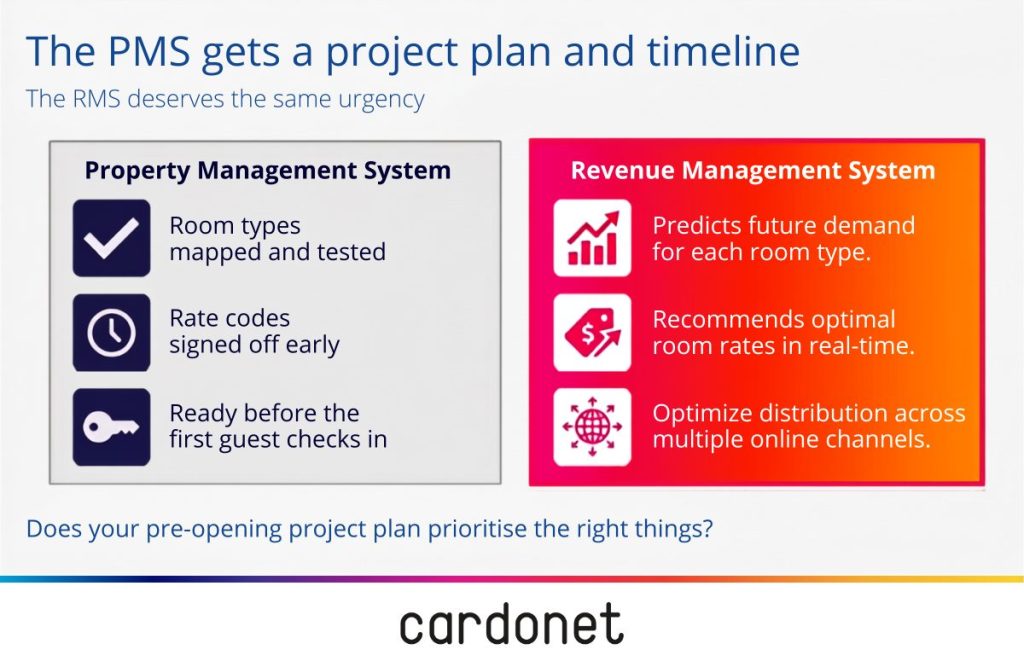
A property management system (PMS) is the system every pre-opening plan is built around. Room types, rate codes, and channel connections get mapped, tested, and signed off well before a single guest checks in. A revenue management system (RMS) does something just as fundamental. It sets the price on every one of those rooms, night after night, which is the single number that determines whether a hotel’s first year is profitable or merely busy. That system earns the same billing on the project plan as the PMS it sits alongside.
What a modern RMS actually does
Revenue management software has moved a long way past static rate cards and rules a revenue manager configures once and leaves alone. Modern platforms read live market signals: competitor rates, local events, forward booking pace. They adjust pricing automatically, in some cases many times a day. A weekly manual review isn’t what these platforms are designed around.
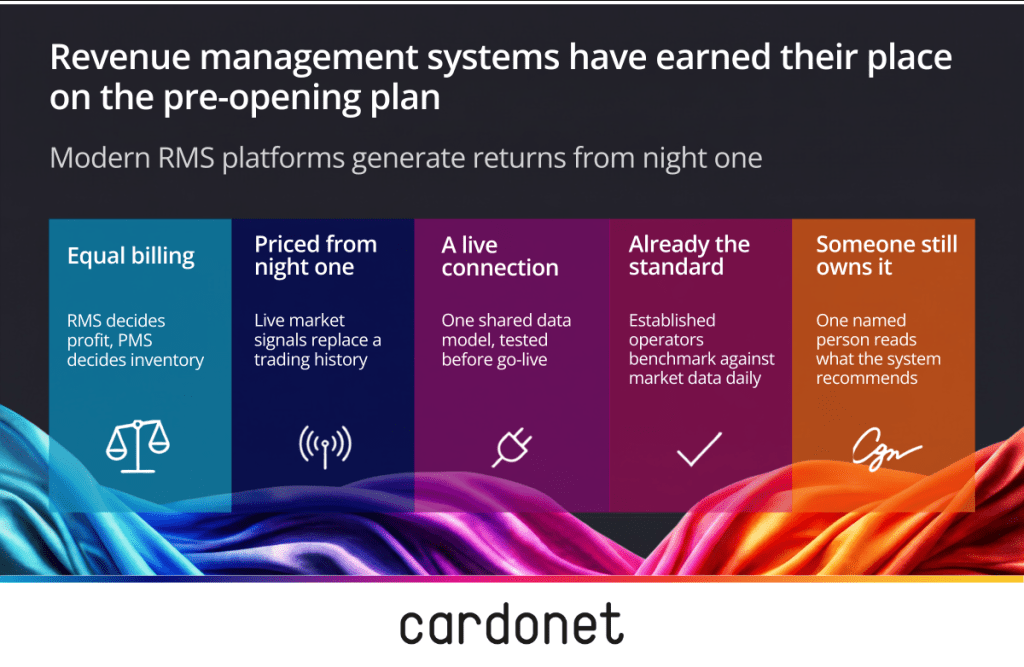
The most capable of these platforms price using live market signals rather than a property’s own trading history. That’s a meaningful capability for your new hotel specifically. A brand-new property has no historical data to draw on. A model built around live market signals can start pricing correctly from a hotel’s very first night, using the market it is opening into instead of a track record it hasn’t had time to build yet.
What that shift looks like in practice:
- Rates that adjust automatically against live competitor pricing and local demand throughout the day
- Forecasting built on forward market signals: local events, booking pace, comp set movement
- A direct connection to the property management system, so rate changes push through automatically
- Plain-language reasoning behind each price, so you can see why a rate moved and explain it to an owner
None of this requires an enterprise budget or a dedicated revenue team. Technology at this level now sits within reach of a single-property owner managing pricing alongside a dozen other responsibilities, not just branded groups with full revenue departments.
Why the two systems have to talk to each other
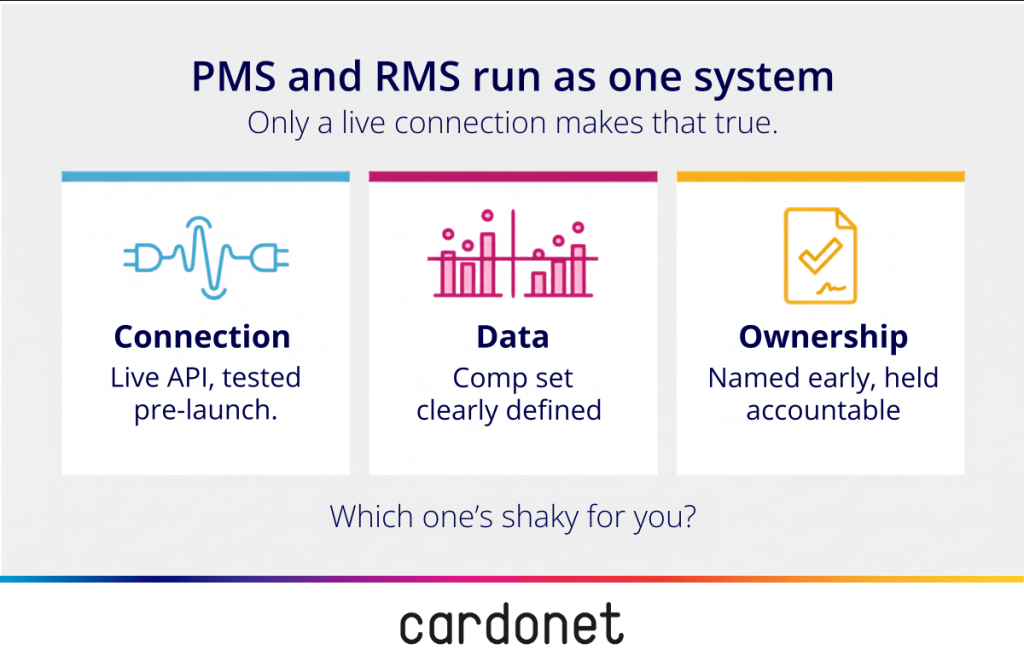
A PMS and an RMS function are effectively two elements of a single system, and that only works if the systems can actually communicate in real time. The PMS holds inventory and guest data: who’s staying, in which room, for how long. The RMS prices what the PMS is selling, using that same inventory data alongside live market signals. Neither system does its job properly in isolation. A rate the RMS calculates is worthless until it reaches the PMS and every booking channel behind it. Inventory data the PMS holds does the RMS no good if it arrives an hour late, or not at all.
That communication takes more than picking two products that both claim to integrate. The real test is the underlying architecture: a live API connection rather than a file uploaded once a day, network infrastructure that can carry that data reliably at the volume and speed a hotel actually needs, and a data model both systems genuinely agree on, so a room type in the PMS means the same thing in the RMS. Get any of that wrong and the two systems technically “integrate” on paper while quietly working from different pictures of what’s actually available to sell.
Ask, specifically, whether your RMS and PMS share a live data model, or whether someone ends up updating rates in two places. The first setup delivers the speed and accuracy modern RMS technology is built for. The second quietly undoes it, however good the underlying pricing engine is. Confirming this while the network and systems architecture is still being built, rather than retrofitting it after go-live, means the connection gets tested with time in hand, before a single booking relies on it working correctly.
What good looks like
Boutique Hotelier reported in April 2026 that established UK hotel operators run dedicated RMS platforms daily, benchmarking pricing against CoStar market data as standard practice. That’s not an aspiration. It’s how operators at that level already run, once trading pressure makes the discipline worth the investment. Benchmarking against market data specifically means every rate decision gets checked against what the wider market is actually doing, not just what one property’s own booking pace happens to suggest.
That level of discipline isn’t reserved for hotels with years of trading history behind them. A new hotel can build toward the same standard from its first night of trading, rather than growing into it over several years.
Getting it right from day one
Getting this right comes down to three things you can decide before opening day:
- A live API connection between the RMS and the PMS, tested on real infrastructure before go-live, not assumed from a vendor’s integration checklist
- A comp set defined and benchmarked from the first night of trading
- Clear ownership: whoever is accountable for the rates this system sets, named before the contract is signed
A revenue management system is only as good as the judgement behind it. Even the most capable AI-driven platform needs someone reading its recommendations against what’s actually happening on the ground: a local event the system missed, a booking pattern that doesn’t match the forecast, a brand standard that changes who your hotel is really competing with. Software closes the gap between guesswork and good pricing.
A person still owns the outcome, and naming that person before opening day means they’re reading the system’s output from the first rate it ever sets, not inheriting a strategy someone else already shaped.
The investment case: pay now, profit later
Investing in this properly costs time and money: choosing the right platform, connecting it to the PMS on infrastructure built to carry that data reliably, and giving someone real ownership of both before the doors open. The return isn’t abstract. A hotel pricing correctly from its first night of trading captures revenue a hotel pricing on guesswork simply doesn’t, in the exact window where every booking is establishing the property’s position in its market for years to come.
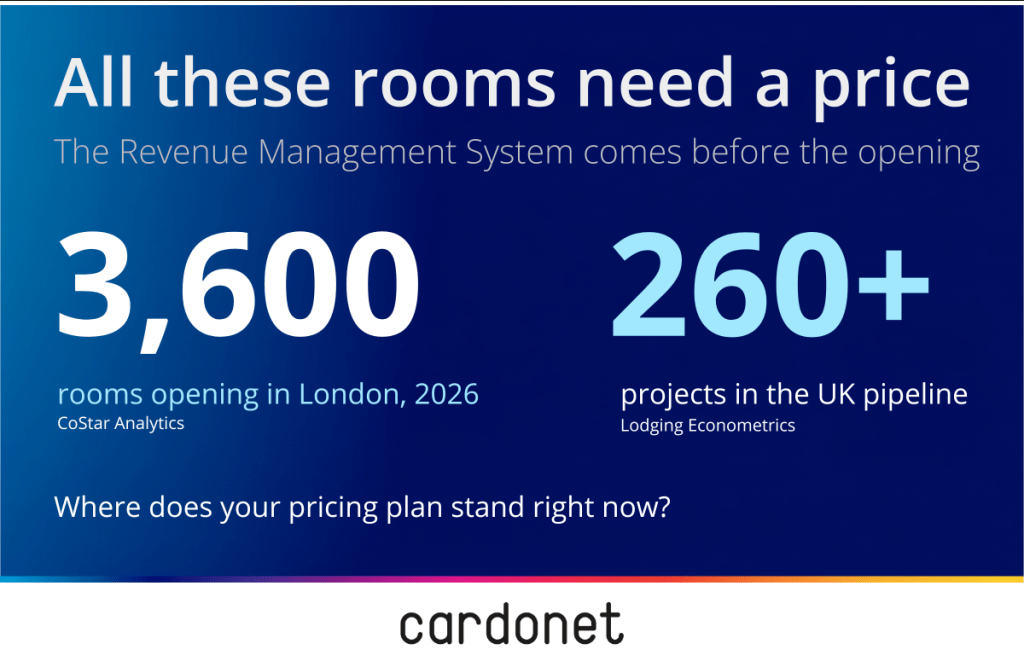
The opportunity is sizeable right now. CoStar Analytics put the number of rooms entering the London market in 2026 at roughly 3,600, a 3% rise on the previous year’s deliveries. Lodging Econometrics data puts the UK’s development pipeline at over 260 projects, the largest in Europe. Every one of those properties will settle on a revenue management strategy at some point. If your opening date sits anywhere in that window, that decision needs to be made now. Properties that treat it as a day-one investment, on the same plan and the same timeline as the PMS, see the return sooner, and they will get it from the highest-stakes trading window a hotel will ever face: the months before its own history exists to guide anyone.
A hotel’s PMS and its RMS answer two different questions: what do we have to sell, and what can we sell it for. Both deserve a place on the project plan from the very start, resourced and given real ownership with the same seriousness that a hotel already gives its PMS.
Bringing your Managed IT Services partner into that planning from day one means the systems that run your pricing, and the infrastructure connecting them, are chosen and built properly, with someone accountable for the outcome from the first night of trading. Book a meeting to talk through where revenue management technology sits on your own pre-opening plan.
FAQs
1. Do we need a revenue management system if we don’t have a dedicated revenue manager?
Yes. Modern RMS platforms are built to work without a dedicated revenue team, using automated pricing that adjusts against live market signals rather than requiring someone to configure and monitor it manually. The technology sits within reach of a single-property owner managing pricing alongside other responsibilities, not just branded groups with full revenue departments. Someone still needs to own the outcome and review what the system recommends, but that’s a different commitment from running pricing manually.
2. How is a revenue management system different from just setting prices manually in our PMS?
A PMS holds your inventory and guest data: who’s staying, in which room, for how long. It doesn’t decide what to charge. An RMS reads live market signals, competitor rates, local events, forward booking pace, and adjusts pricing automatically, in some cases many times a day, instead of relying on a static rate card or a weekly manual review.
3. Can an RMS actually work without any booking history for a brand-new hotel?
Yes. The most capable platforms price using live market signals rather than a property’s own trading history, which is exactly the situation a brand-new hotel is in. That doesn’t remove the need for judgement: someone still needs to be reading the system’s recommendations against what’s actually happening on the ground, since even the best platform can miss a local event or misread a booking pattern early on.
4. What’s the risk if our RMS and PMS aren’t properly connected?
A rate the RMS calculates is worthless until it actually reaches the PMS and every booking channel behind it, and inventory data from the PMS does the RMS no good if it arrives late or not at all. Without a live API connection and a shared data model, the two systems can technically “integrate” on paper while quietly working from different pictures of what’s actually available to sell.
5. When should we start planning our RMS, and who should be involved?
On the same project plan and the same timeline as your PMS, not after it. That means confirming a live API connection tested on real infrastructure before go-live, defining and benchmarking a comp set from the first night of trading, and naming who’s accountable for the rates the system sets before the contract is signed.



You must be logged in to post a comment.