
A digital training platform can standardise what your restaurant group teaches. It can’t standardise the technology underneath it, and that gap breaks the same way in three different circumstances: onboarding a new hire, refreshing an existing team, and opening a new site.
Three Circumstances, One Shared Failure
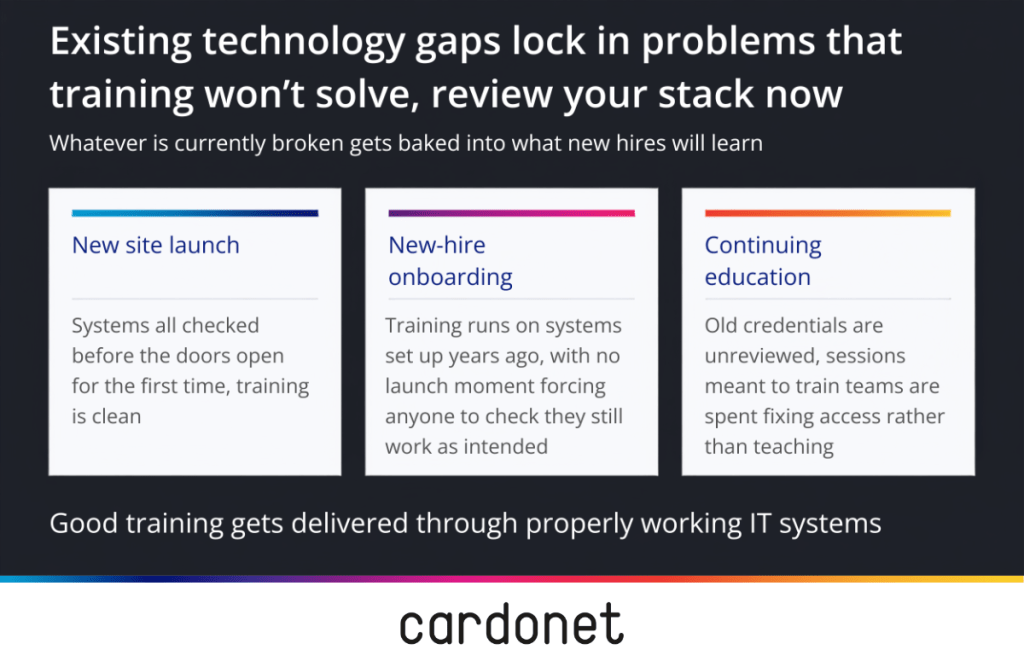
Training happens for one of three reasons. A new hire joins a site that’s already open. An existing team gets a refresher on something that’s changed – a menu, a procedure, a compliance requirement. Or a brand new site opens and needs its first cohort trained from nothing.
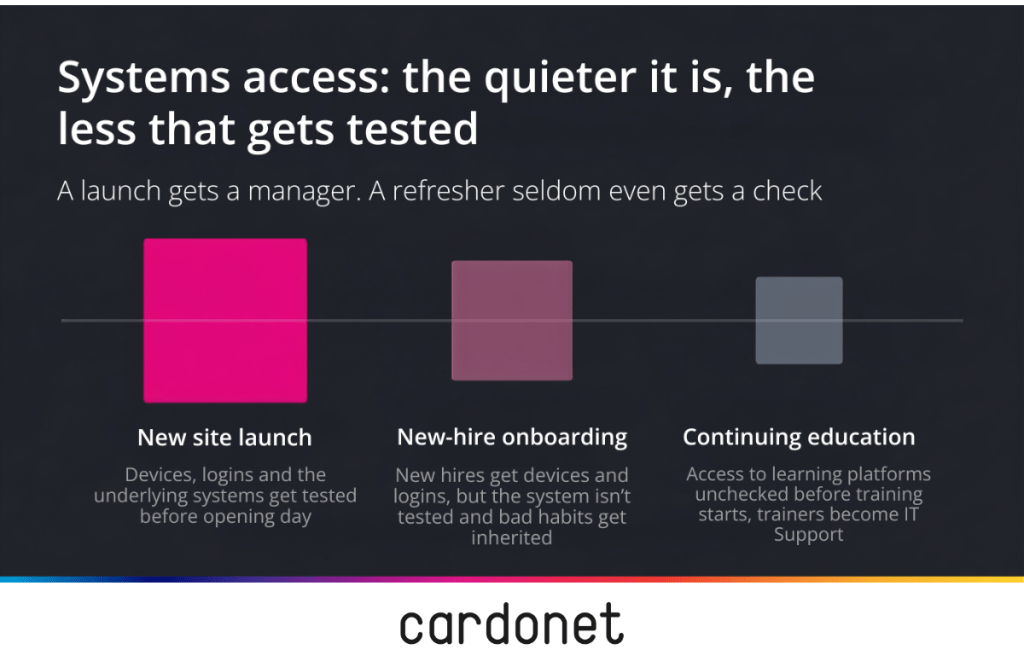
Only the third one, in my experience, reliably gets checked before it happens. New Site Launch tends to come with a formal pre-opening plan: someone named, a timeline set, devices and logins confirmed before day one arrives. The other two inherit whatever configuration was left in place when the platform was first set up, sometimes years earlier. Nobody at your sites goes back and checks it.
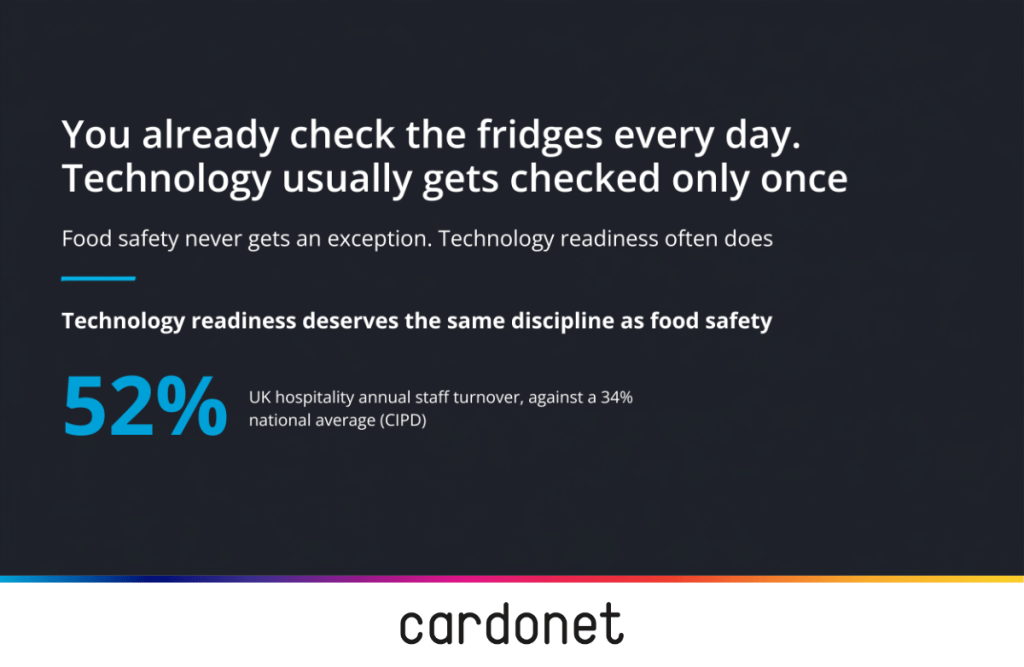
That imbalance would matter less if the three circumstances happened equally often. They don’t. UK hospitality carries the highest staff turnover of any sector tracked by the Chartered Institute of Personnel and Development (CIPD): 52%, against a 34% average across the wider UK workforce. That turnover is New-Hire Onboarding, and across the businesses I support it runs constantly, all year round, while a genuinely new site only opens when a group actually decides to expand. The circumstance with a process built around it is the one that happens least.
The Same Four Things, Whichever Circumstance Triggers Them
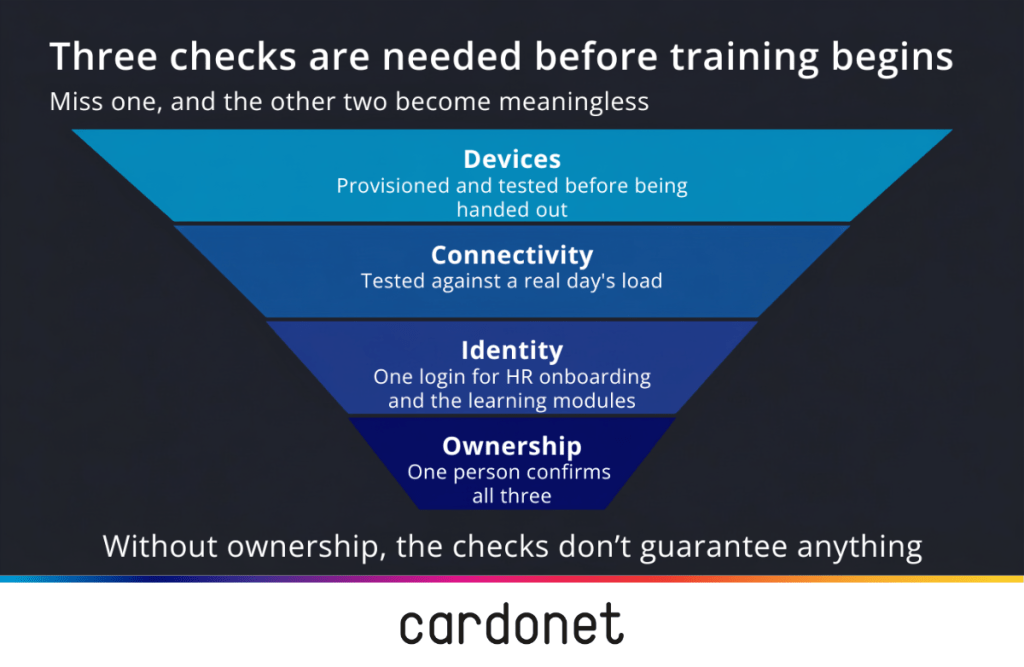
Whichever of the three puts someone in front of a training platform at your business, the same four things need confirming before that moment starts:
- The devices assigned need to be switched on, connected, and tested against the learning management system (LMS) itself before anyone hands them out.
- Connectivity needs testing against a real day’s load, with training traffic running on top of whatever else the site is already doing.
- Human resources (HR) onboarding and the LMS need to share one identity, confirmed working every single time it’s used.
- One named person needs to confirm all three, whether it’s a single new starter, a full refresher rollout, or a new site’s opening cohort.
Curriculum content is different. Whoever designs the course keeps ownership of that, and it doesn’t shift by circumstance. The four items above do, or should, and in practice the groups I support build that discipline once, for New Site Launch, and rarely extend it any further.
Continuing Education hides its version of this risk well, because nothing about it looks like a setup task. The staff receiving a refresher module already have devices. They already have logins. What they might not have, any more, is a password that hasn’t expired, a device that hasn’t been swapped for a replacement since the last course, or a permission that survived a change of role. None of that shows up until the module goes out and someone can’t get in.
What Breaks Training Day, and Why Managers Absorb It
An unchecked technology gap creates the same pressure whichever circumstance triggers it: two jobs land on one person at once. They’re meant to be delivering training. If nobody checked the technology beforehand, they end up delivering IT support instead, because a login that doesn’t work demands attention immediately, while a training module can wait.
The manager stuck fixing a router loses more than a few minutes. They lose the chance to run the session they were meant to give, at the exact moment a new hire is forming their first impression of the business, or an existing team member is trying to take in a genuine change to how they work. Apologising for a broken system is a strange way to deliver either one.
A generic IT contact will confirm a login is live. A partner who actually understands multi-site hospitality operations will confirm it’s live with training traffic running at the same time the kitchen printer, the point of sale (POS) terminals, and guest WiFi are all pulling bandwidth for a normal service period. Both answers sound the same on a call. Only one of them holds up once the session actually starts.
New site openings announce themselves. A single new starter walking into a site that opened five years ago doesn’t trigger anything at all. That’s the whole reason, in most groups I’ve worked with, the second one goes unmanaged – and Continuing Education is quieter still, because in the groups I’ve supported, nobody assigns anyone to confirm access before a refresher goes out to people who, on paper, already have everything they need.
The Legal Floor Doesn’t Move Because of Which Circumstance Triggered Training
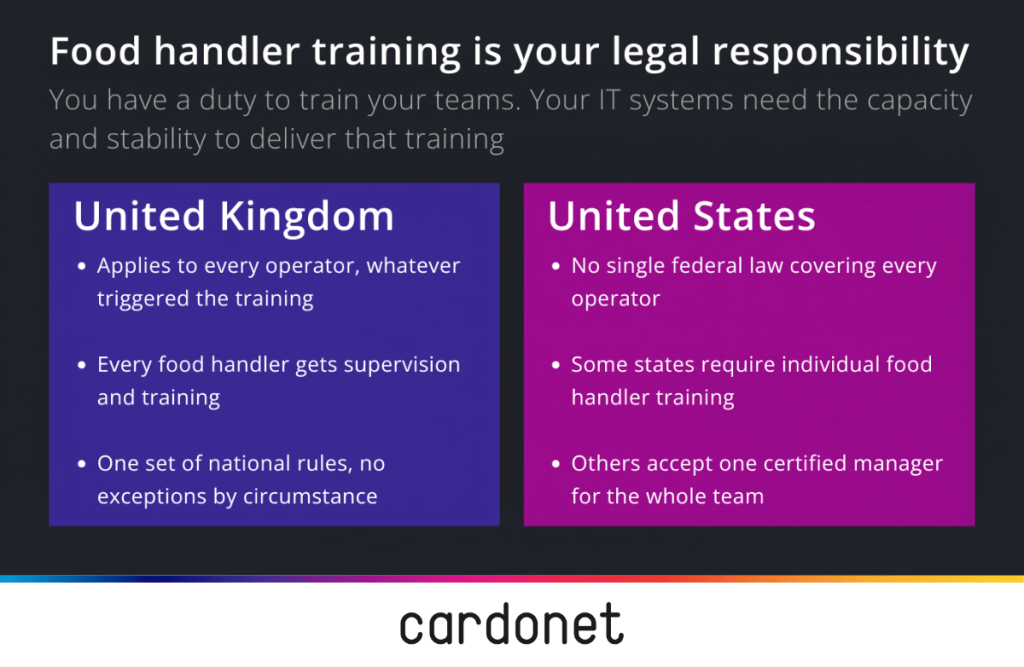
Whichever of the three circumstances applies, the legal duty underneath it stays exactly the same. UK law places that duty directly on the operator: every food handler must receive supervision and training appropriate to their role. It doesn’t matter whether that person is a brand new starter, an existing team member refreshing their knowledge, or part of a new site’s opening cohort. The US has no equivalent single statute. The requirement is set state by state instead, and it takes different shapes depending on where a site sits: some states require every food handler to complete individual training, others accept a single certified manager vouching for the whole team.
Every site in your estate can generate a timestamped completion record showing a course was finished. What it can’t confirm is whether the person behind it had a device that worked, a connection that held, or a login that let them in on the first attempt. Attendance and competence are not automatically the same thing.
An inspector doesn’t ask which circumstance brought someone into a course either. They look for evidence that the specific person in front of them was trained appropriately for the job they’re doing. A completion record answers part of that question. It doesn’t answer whether the training actually reached the person at the standard their role requires, and that’s the part worth being able to demonstrate before someone else asks for it.
A Readiness Discipline That Covers All Three
The right platform fixes the curriculum problem, for whichever circumstance triggers a session. It fixes nothing about delivery, and no vendor selling that platform has much reason to point that out.
Checking devices, connectivity and access against a genuine day’s load, with someone specific accountable for confirming it, shouldn’t depend on whether the training moment is a new site’s opening week or one starter’s first shift. Bring in a technology partner who supports restaurant operations end to end across your estate, and get the connectivity itself reviewed against real training and service loads as a standing check that runs every time, launch day or not.
Restaurant groups already run an equivalent discipline for food safety. A new site doesn’t open without someone confirming the fridges hold temperature and the extraction is certified, and that discipline doesn’t relax once the site has been open a year. Training delivery readiness deserves the same treatment, whichever of the three circumstances brings the next person to the platform.
Frequently Asked Questions
Why does the same technology check need to apply to onboarding, refresher training, and new site launches?
Because the underlying failure is identical in all three: a device that isn’t provisioned, a connection that can’t carry training traffic, or a login that doesn’t work. Only New Site Launch reliably gets checked for this before it happens. The other two inherit whatever was set up once, sometimes years earlier, and rarely get revisited.
What are the four things to confirm before any training session?
Devices switched on, connected and tested against the learning management system (LMS) itself; connectivity tested against a real day’s load; human resources (HR) onboarding and the LMS sharing one confirmed identity; and one named person accountable for confirming all three, whichever circumstance triggered the session.
Why does onboarding a single new hire get missed more often than a new site opening?
A new site opening announces itself and usually gets a formal process built around it. A single new starter joining a site that’s been open for years announces nothing, so nothing forces anyone to check devices, connectivity or access beforehand. Hospitality’s high staff turnover means that quiet circumstance happens far more often than a new site opening does.
Are we legally required to train staff to the same standard regardless of why they’re being trained?
Yes. In the UK, food business operators are legally required to ensure every food handler receives supervision and training appropriate to their role, regardless of whether that person is a new starter, an existing team member on a refresher, or part of a new site’s opening cohort. In the US, the requirement is set individually by each state, with no single federal law covering every operator.
How often should this readiness check run?
As a standing discipline that runs every time, independent of any single launch date. Restaurant groups already run an equivalent discipline for food safety, confirming things like fridge temperatures before a site opens, and that discipline doesn’t relax once the site has been open a year. Whichever of the three brings the next person to the platform, treat it with the same ongoing rigour.



You must be logged in to post a comment.